

Skip to content

Yorkshire Crop Nutrition Club

Testing tools to improve crop nutrition decisions

There are an increasing number of tools promising to save fertiliser or increase yield through better crop nutrition.

These range from sensing and measurement technology through to data analytics and forecasting.

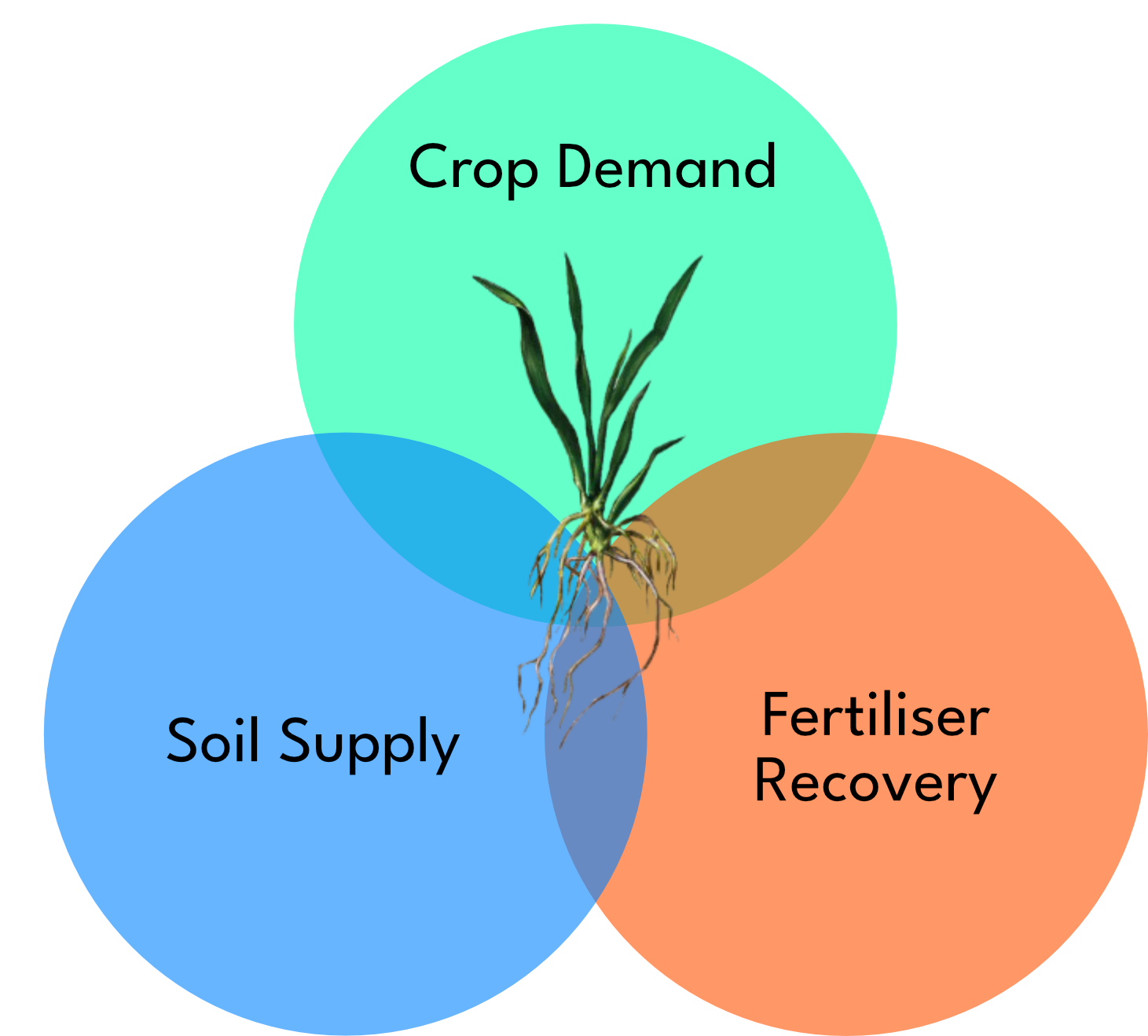
However, there is still insufficient evidence of their performance on farm, the Yorkshire Crop Nutrition Club aims to rectify that. This ADOPT-funded project brings together four farms in Yorkshire to test a range of technology to enable more accurate, efficient, and environmentally responsible fertiliser decisions. Fundamentally, crop nutrient requirements depend of three factors:

Venn Diagram-1

We can estimate those by Reviewing past experience to Plan nutrient management decisions. In season, we can Check nutrient status with a range of tools to estimate crop deficiency or sufficiency and judge the likely Responsiveness to fresh nutrient applications. At the end of the season, we can Review the success of our nutrient management to inform future decisions. 

Software Tools

Review and combine past data from soil and crop analyses, yields and fertiliser records

Soil Sensing

Measure nutrient availability and other potential crop limiting factors in the soil.

Satellite Sensing

Using satellite data to measure crop development.

Crop Sensing

Direct measurement of the crop's nutrient status.

Harvest Measures

Yield mapping and grain quality measurements.

 “I am looking for a tool, sensor, piece of software – whatever it may. At the minute, I go by textbook. I want to be more accurate, to make better decisions."

Adam Hayward, Farmer

Who is involved?

Lead farm – Southwell and Knapton

Farmer Peter Southwell has a long-standing interest in crop nutrition and has been an early adopter of precision farming technologies. He farms, 250 ha in Sancton, East Yorkshire with a rotation of cereals, oilseed rape and vining peas.

Adam Hayward

Adam is passionate about using new technology on farm. He is keen to use the project to make better, more accurate fertiliser decisions. He farms 400 ha in partnership with his family at Cold Harbour Farm in Bishop Burton, East Yorkshire. The farm grows wheat, oilseed rape, spring barley, vining peas, spring beans and grass for a suckler herd.

David and Clive Blacker

Farming together as N Blacker & Sons in Shipton, North Yorkshire. They contract farm and manage around 400 hectares of combinable crops in the Vale of York. They were early adopters of precision agriculture technology and are invovled with a range of trials on-farm.

Liz and Jeremy Harrison

Responsible for 1600 ha of arable land near Driffield East Yorkshire as well as housing 6000 indoor finisher pigs. They have a chalk-based stream running through the farm so have a drive to improve nutrient efficiencies, reduce losses to the environment.

ADAS logo

Dr. Pete Berry and Dr. Kate Storer will lead the ADAS contribution to the project. They are and are based at High Mowthorpe in North Yorkshire

The ADAS High Mowthorpe Farming Association has over 40 farmer and advisor members from across Yorkshire, who regularly meet to discuss results from agronomy and crop nutrition projects. This community will form an extension to the core group of 4 farmers in the Crop Nutrition Club.

The Challenge

Every season, farmers face uncertainty:

  • Under-application risks yield and quality losses.

  • Over-application wastes money and increases environmental harm.

Current tools — soil sampling, tissue testing — are limited, often providing only snapshots and lacking real-time insight. New technologies promise better decisions, but farmers need evidence of what works in practice.

The Solution

The Crop Nutrition Club will:

  • Benchmark past nutrient performance using soil tests, fertiliser records, crop analyses, and yields.

  • Test a range of tools including soil sensors (Paul Tech, PES, PRS probes), crop sensors (Picketa LENS, Dualex, N-Tester, Messium), and sap/leaf testing.

  • Compare these against lab analyses and real-world outcomes.

  • Trial ‘complete nutrition’ vs ‘modest nutrition’ strategies to see where fertiliser can be saved without sacrificing yield.

This collaborative approach focuses on evidence-based decision-making, not just testing products in isolation.

Hear from the farmers involved

Watch the video to learn more about the Yorkshire Crop Nutrition Club

Deploying new technology 

The inherent complexity and variability of soil and crops across an arable field, coupled with the wide range of potential limiting factors on crop potential mean that achieving results with new technology needs patience and attention to detail. This project will test a number of promising tools that can offer tangible benefits to farms and advisors. Some of the tools are included in the list below:

  • Paultech
  • Plentysense
  • WesternAg Plant Root Simulator
  • PetiolePro
  • Senseen Nutriscope
  • N tester / YaraPlus


  • Messium
  • Assimila Acropalis
  • Yield maps
  • Protein mapping by HarvestLab or CropScan
  • Grain nutrient analysis
  • Omnia / Gatekeeper / Muddy Boots
  • AgAnalyst DataBaler
  • Soil Benchmark
  • Navigate Pro
  • PLANET