Project
Soil Health
Nutrition

Originally published in Direct Driller Magazine - May 2026.
One year ago, Direct Driller covered the launch of the ADOPT funding scheme from Defra’s Farming Innovation Programme with Innovate UK. ADOPT supports farmers in testing new ideas, products or practices on farm, providing project grants of £50-£100k over 1–2 years.
70 farmer-led projects have now started. With a total initial funding commitment of £20 million there is still scope for more farmers to start projects to test their ideas. Direct Driller readers have been responding to the opportunity. After the first article, several farmers reached out and were put in touch with Dr Daniel Kindred at the newly formed Agronomy Research Circle (ARC).
“ADOPT has already been transformative” says Daniel. “Farmers are experimenters by nature, but they often lack the time, support, or networks to formalise trials, analyse results, or share insights. ADOPT offers the funding and framework to enable that”.
Farmers can apply for a Facilitator Support Grant that enables a Project Facilitator like Daniel to help turn an idea into a fully formed project proposal.
In the first year, Daniel has worked on 18 successful Support Grants and has helped get 12 Full ADOPT projects funded. He’s now started ‘ARC Innovators’ as a place for farmers, agronomists, researchers and agtech providers to collaborate. They can work on farm innovation projects from the earliest stages and be the first to get results as they emerge. It already has over 150 members.
“The last year has shown there is a real demand for supported on-farm trials across a wide range of topics. We’ve got ADOPT projects on crop nutrition, no-till systems, on-farm composting, smart irrigation, benchmarking, disease detection and more.
Projects underway
Will Grant from Lincolnshire was one of the first farmers to get in touch with ideas for an ADOPT project, wanting to evaluate a high-capacity compost turner.
“We wanted to prove the benefit of processing manures and applying compost, with a newly designed compost turner that could make composting on-farm feasible for us. This project gives a really good opportunity to thoroughly investigate this and hopefully demonstrate to others that it’s possible to see improvements in soil health, fertility and yields,” says Will.
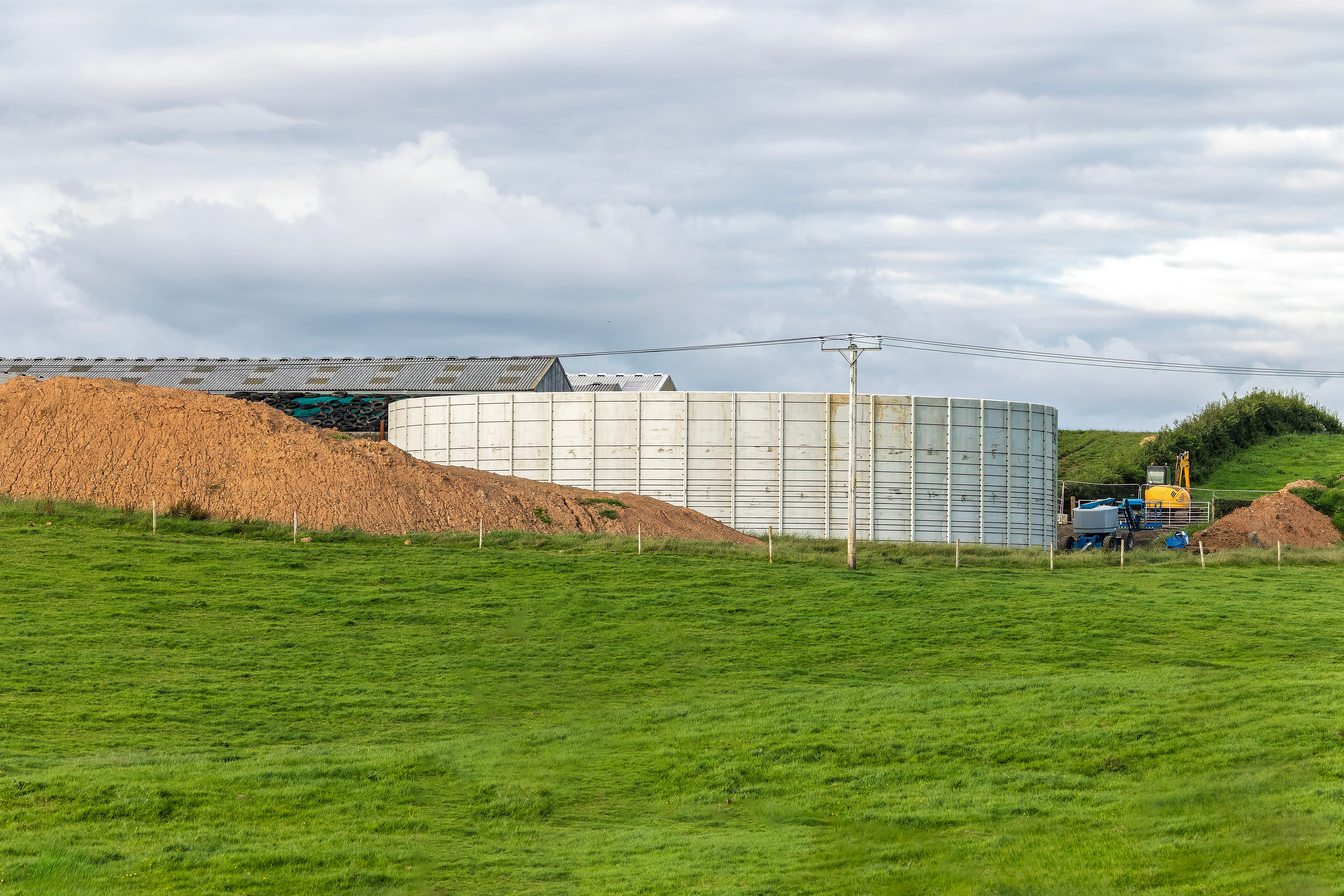
Farmyard manure is rich in nutrients, but management can be a challenge not least because of the sheer volume of material. Raw manure applications are tightly regulated by NVZ and Farming Rules for Water, and also result in significant nutrient loss through run off and volatilisation. Will is keen to move away from applying raw manure due to the emissions and the difficulties of storing and handling.
The project allows Will to work with Essex arable farmer Simon Cowell who has over two decades’ experience of producing and using compost on farm. A ‘regenerative farmer’ many years before the term was even coined, he is contributing to the design of the new composter that the project is testing,
As Simon explains, “When you spread manure on a field most of the carbon disappears up into the atmosphere. But by composting you are stabilising it. So, when you put it on the soil you are literally raising the organic matter levels in the soil. But the other more interesting part is the biological inoculation you get with compost.”
In Simon’s experience of having visitors on farm, the cost of the composting machine is a major barrier to wider uptake. “For a long while, I’ve wanted to redesign the machine and make it more affordable. There’s lots of things about it that could be made simpler and cheaper.”
Following conversations with Daniel on the yield limitation that Simon sees in his long-term no-till situation, and his strangely higher yielding headlands, Simon and Daniel developed another ADOPT proposal to investigate with a range of soil and crop measures and simple trials. That project brings in other no-till farmers John Cherry and Andy Howard, with expertise from David Purdy and Rothamsted Research.
Another ADOPT project is looking at a technology from the US, Firewater, that electrifies water and air to create a cold plasma, fixing nitrate in plasma activated water. Simon Craven has the first machine in the UK running on his farm in Yorkshire, and with Staffordshire farmer Tim Ellis they will be testing its value in simple field trials to reduce nitrogen applications. They are excited by its potential to transform the model of fertiliser production and distribution.
The Agronomy Research Circle is based on the idea of supporting and connecting groups of farmers in a given region or with an interest in a particular topic. Daniel explains “I’m hopeful with ADOPT that we can form grower groups that persist beyond a projects end, providing an enduring bottom-up approach to generating and sharing knowledge that’s useful to farmers”.
With that in mind, ARC’s first ADOPT project brought together four farms in Yorkshire with ADAS’ local farming association to create the Yorkshire Crop Nutrition Club. The initial focus is on testing approaches and technologies to make better nutrient decisions. Partner Adam Hayward says, “The project being open is a big draw for me, being able to discuss things openly within a network. Previously projects have often been a bit more closed off, with sensitivities around a company’s intellectual property. This feels more properly farmer-led where we’re going to be able to benefit more people than just the small group we are currently in.”
Proving ‘what works’ on farm
The Agronomy Research Circle takes a broad view of the approach to help farmers evaluate whether a practice, product or technology is worthy of adoption. Daniel suggests there are four ‘Es’ or elements that can sway a farmer’s decision.
“First, there needs to be a good Explanation for why something works. Next, there can be Evidence of positive associations with crop performance. We are just starting an ADOPT project on data sharing and benchmarking adopting the approach from the Yield Enhancement Network (YEN).
“Experiments are invaluable in proving a difference between one decision and another, but it can be easy to jump to false conclusions so care is needed. Finally, we shouldn’t underestimate the importance of Exchange – sharing experiences is often the most powerful route to adoption – farmers learn most from other farmers.”
“We try to embed these 4Es in each of the projects we run” Daniel continues, “ideally with a work package corresponding to each”.
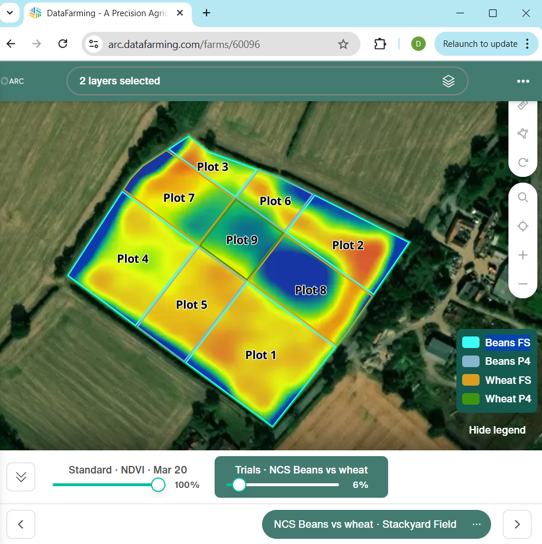
With Australian company Data Farming Daniel has developed the ARC Farm Trials Tool to make it easy to place treatment areas using satellite imagery to see historic spatial variation. “Farmers know better than anyone how soil conditions can vary in just a few metres. Good trial design is vital to avoid misleading results. With satellite imagery through the season seeing a difference ‘to a line’ where you’ve imposed a treatment can give enormous confidence.” The tool is freely available to ARC members.
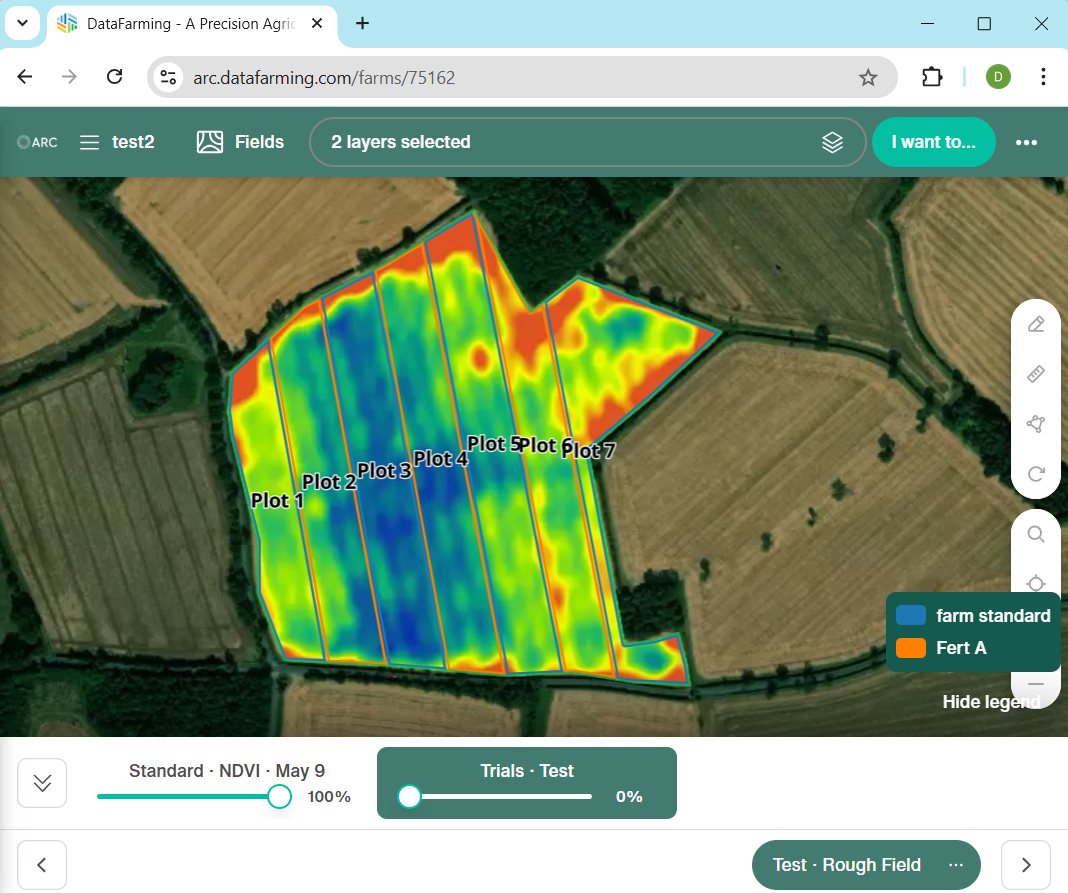
“Knowledge exchange is an essential part of ARC and ADOPT. We want good ideas to get taken up elsewhere. And if something hasn’t worked, we need to share that too, so others don’t try the same thing again but use what we learnt to come up with a better approach.”
Daniel has been really encouraged by the enthusiasm of farmers and quality of ideas he’s engaged with over the past year. “Its still early days both for ARC and for ADOPT, but there is no shortage of good ideas to test or engaged farmers to work with. ADOPT gives us the first opportunity to unleash that potential ” he says.
Defra has recently committed a further £30 million to ADOPT and there are rolling rounds of funding, so applications can be made at any time if there is something you’d like to investigate. Funding rules mean that the lead farmer for any project must be based in England, but farmers from anywhere in the UK can join as collaborators.
The ARC is connected with a wide network of individuals and organisations who can help develop proposals, find collaborators and manage projects.